Twenty Six Weeks in the Woods

Join thousands who've already started their Forest School journey

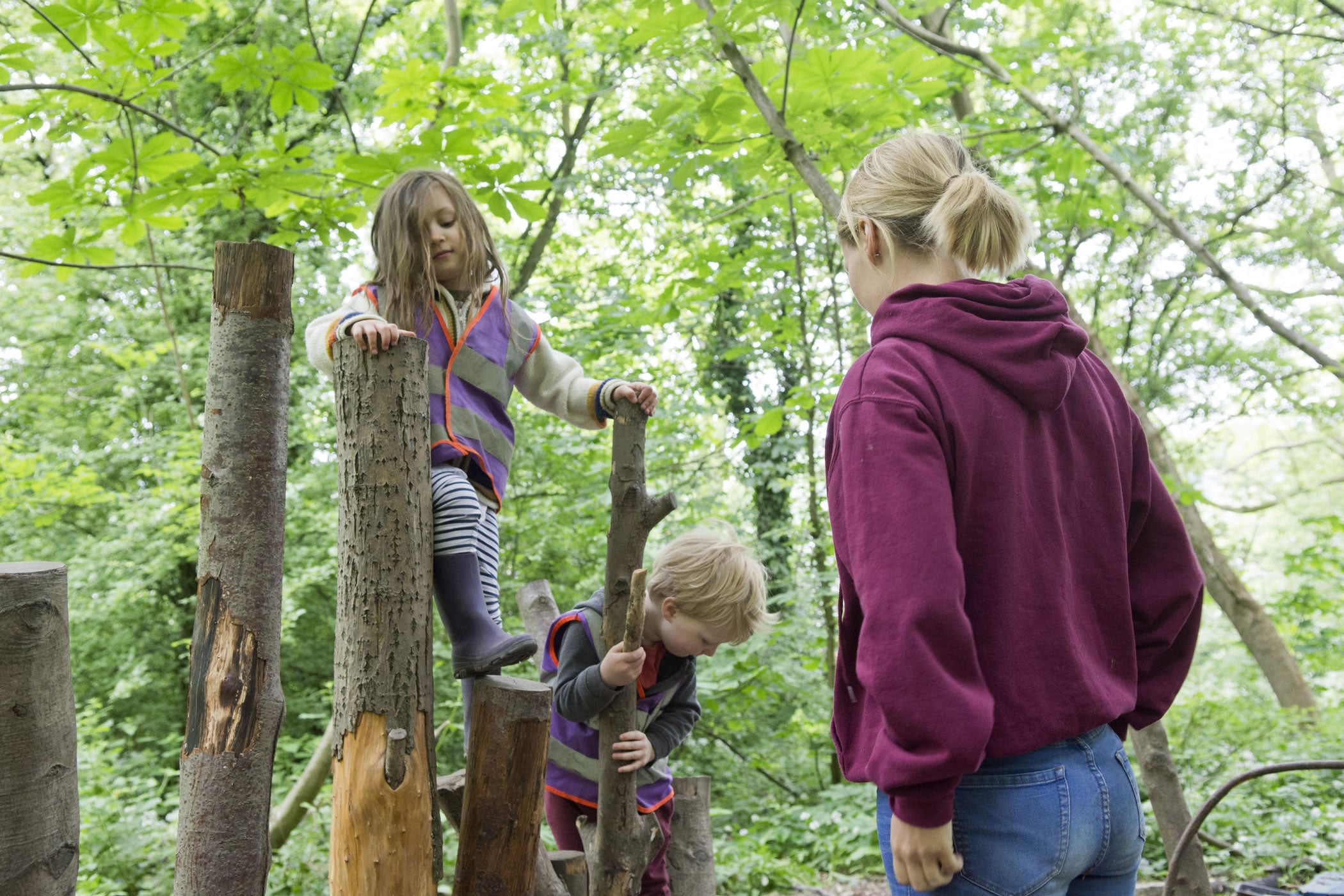
Older children working together outdoors in woodland

Twenty six weeks in the woods

Cook it. Move it. Remember why.

Half a year for older children. Every week has a meal they make on the fire, a session that uses the wood as a gym, and a story that gives the whole thing something to hang on.


Three strands, one afternoon

Older children are usually offered these separately. Cooking is a life skill session. Fitness is PE. Folklore is a literacy lesson. Kept apart, each one is a subject. Put together around a fire, they stop being subjects and start being an afternoon that a fourteen year old will actually turn up for.

  • Food they cookedEvery recipe is vegetarian or vegan, nutritionally sound, and cooked by the children on an open fire. No adult does the cooking.
  • The wood as a gymThirteen HIIT weeks and thirteen lower-intensity weeks, using slopes, logs, ropes, balls and courses the group builds themselves.
  • Something to hang it onA piece of folklore, history or plant lore tied to what is in the pot. The story is what they repeat at home.

Where this sits. Written for practitioners working with children roughly eight and upward. The twenty six weeks run from early spring through to late summer, so the ingredients follow what is actually growing. Run it the other way round and the recipes will fight you.

The programme

Twenty six weeks.

Each week stands alone if you need it to. Run in order, the skills stack: by week thirteen they can build a fire that cooks evenly, and by week twenty four they are running the session themselves.

Week 01Early spring

Nettle

The plant that defends itself, then feeds you

Cook Nettle and potato soupForaged

Young nettle tops (top four leaves only, gloves on), onion, potato, stock, olive oil, black pepper.

Sweat the onion in the billy can, add diced potato and stock, simmer until soft, then throw in the washed nettle tops for two minutes. The sting dies the moment it meets heat. Blend or mash.

Iron, calcium and vitamin C, and more protein than almost any other wild green.

Move Sting and retreatHIIT

Two trees, twenty metres apart. Twenty seconds of hard shuttle running, forty seconds walking it off. Eight rounds. The nettle patch is the finish line nobody wants to overshoot.

Story

In the Wild Swans, the sister must weave eleven shirts from nettles in silence to break her brothers' curse. That is not invention. Nettle fibre was spun and woven in Britain and Scandinavia for centuries, and when cotton ran out in the First World War, German uniforms were made from it. The plant that hurts you is the plant that clothes you.

Week 02Early spring

Wild garlic

Knowing by smell

Cook Wild garlic and white bean flatbreadForaged

Wild garlic leaves, cannellini or butter beans, flour, olive oil, lemon, salt.

Crush the beans with oil and lemon. Roll flatbread dough thin, cook on a hot flat stone or skillet, then pile on the bean mash and shredded wild garlic while it is still hot.

Beans bring protein and fibre; the allium compounds in garlic are what give it its reputation.

Move The long carryLIIT

A steady circuit carrying water and firewood between two points for twenty five minutes. No sprinting. The aim is a heart rate that stays lifted and a conversation that stays possible.

Story

Garlic hung over doorways against plague, and the four thieves who robbed the dead and survived because, they said, of a vinegar steeped in it. The real lesson here is the identification rule, and it is absolute: crush a leaf. If it does not smell of garlic, it is not wild garlic. Lily of the valley grows in the same woods and will make you very ill.

Week 03Early spring

Oats

The grain that fed the strong

Cook Apple and oat bannock on a stick

Oats, flour, grated apple, cinnamon, oil, water, pinch of salt.

Make a stiff dough, wrap a snake of it around a peeled green stick, and turn it slowly over embers, never flame, for about fifteen minutes.

Beta-glucan and slow-release carbohydrate. The thing that keeps a child going until four o'clock.

Move Hill repeatsHIIT

Find a slope. Run up hard, walk down. Six to ten repeats depending on the group. The walk down is the interval, and it is not optional.

Story

Samuel Johnson defined oats in his dictionary as a grain which in England is given to horses, but in Scotland supports the people. A Scot replied: which is why England has such fine horses, and Scotland such fine men. Food carries national pride, and pride carries argument.

Week 04Early spring

Lentils

What you trade when you are hungry

Cook Smoky lentil and tomato pot

Red or green lentils, tinned tomatoes, onion, garlic, smoked paprika, cumin, stock.

Everything into a pot at the edge of the fire and left to tick over for forty minutes while the group does something else. Stir occasionally. This is the meal that teaches patience.

Complete protein when eaten with the bread; iron and folate.

Move The built circuitHIIT

The group builds an obstacle course from logs, rope and whatever the wood offers, then runs it in thirty second bursts with a minute of recovery. Six rounds. They will build it harder than you would have.

Story

Esau came in from the field starving and sold his birthright to his brother for a bowl of lentil stew. He got one meal. He lost everything that came after. Worth asking a fourteen year old what they would have done, and what they have traded lately for something immediate.

Week 05Early spring

Dandelion

Lion's tooth, and the clock

Cook Dandelion leaf and chickpea salad, with root coffeeForaged

Young dandelion leaves, chickpeas, lemon, oil, mustard. Roots scrubbed and roasted in the embers.

Dress the chickpeas while warm and fold through the torn leaves. Roast the cleaned roots in the ashes until dark and brittle, crush them, and steep in hot water.

Bitter leaves stimulate digestion. The root is inulin, which feeds gut bacteria.

Move Slow balanceLIIT

A twenty minute circuit of fallen logs, low beams and stepping stones, moving slowly and deliberately. Low intensity, high attention. Harder than it looks and better for coordination than anything fast.

Story

Dent-de-lion, the lion's tooth, for the jagged leaf. The French call it pissenlit and the old English name was wet-the-bed, because herbalists used it as a diuretic and it works. Children blow the clock to tell the time. Every part of that plant has been used, named and believed in.

Week 06Early spring

Roots

What waited underground all winter

Cook Ember-roasted roots with herb oil

Beetroot, carrot, parsnip, whole garlic, olive oil, thyme, foil.

Wrapped whole and buried in the ashes at the edge of the fire for forty five minutes. Unwrap, split, dress with herb oil.

Slow carbohydrate, beta-carotene, and the sweetness that comes only from long dry heat.

Move Dig and sprintHIIT

Stones or logs moved from one point to another under time, alternating twenty seconds of loaded carry with forty seconds rest. Eight rounds. Loads matched to the child, not the group.

Story

Before the pumpkin crossed the Atlantic, the lantern was a turnip. Hollowed, carved, carried on Samhain to frighten off what walked that night. Hold a carved turnip and you are holding the older version of a thing every child thinks they already know.

Week 07Late spring

Elderflower

Ask before you cut

Cook Elderflower cordial and frittersForaged

Elderflower heads picked in full sun, sugar, lemon, citric acid. For fritters: flour, sparkling water, oil.

Steep the heads overnight in hot syrup with lemon for cordial. For fritters, dip whole heads in thin batter and fry briefly in a shallow pan over the fire, stalk held like a handle.

Vitamin C, and a flavour children remember for the rest of their lives.

Move The long walk outLIIT

A sustained forty minute walk to the elder and back, carrying the picking baskets and water. Steady effort, no stopping. The reward is at the end of it.

Story

The Elder Mother lives in the tree and you ask her permission before you cut a branch, or the luck goes out of your house. Every part of elder was used: flowers, berries, bark, leaves. The countryside called it the medicine chest, and that is exactly why the folklore protects it. Superstition is often conservation wearing a costume.

Week 08Late spring

Peas

The food that made winter survivable

Cook Smashed pea and mint on fire-toast

Frozen or fresh peas, mint, lemon, olive oil, garlic, good bread.

Blanch the peas in the billy, crush roughly with mint and lemon, pile onto bread toasted on the grill until it is properly charred at the edges.

Protein, fibre and vitamin C in a form no child argues with.

Move RelayHIIT

Teams, a ball, and a course. Thirty seconds flat out, ninety seconds recovery, ten rounds. Competition does the work that instruction cannot.

Story

Pythagoras forbade his followers to eat beans and nobody agrees why. But pease pottage kept medieval England alive through February, and the rhyme survives: pease porridge hot, pease porridge cold, pease porridge in the pot nine days old. Nine days. They were not joking.

Week 09Late spring

Mushrooms

The network under your feet

Cook Skillet mushrooms with thyme

Cultivated mushrooms only, garlic, thyme, olive oil, bread.

Dry-fry hard in a hot skillet until they squeak and colour, then add oil, garlic and thyme at the end. Never at the start.

Vitamin D if they have seen sunlight, plus umami that makes a vegan meal taste finished.

Move The mycelium runLIIT

The whole group linked by rope, moving a set circuit together at a sustained low intensity. Nobody can go faster than the slowest. Twenty five minutes. The point lands without you saying it.

Story

Fairy rings were where they danced, and to step inside was to be taken. What is actually there is one organism spreading outward underground, connecting trees, moving carbon and warning of attack. The old story and the new science are describing the same thing. We do not pick wild fungi, ever, and this is the week to say why.

Week 10Late spring

Herbs

The language of plants

Cook Herb and lemon bulgur

Bulgur or couscous, parsley, mint, dill, lemon, oil, spring onion.

Steamed in a covered billy off the direct heat, then forked through with far more herbs than feels sensible.

Whole grain, and herbs carry more antioxidant per gram than almost anything else in the meal.

Move Scent trailLIIT

A slow navigation course marked by crushed herbs rather than flags. Sustained walking pace for half an hour, using the nose instead of the eyes.

Story

Rosemary for remembrance, and it was thrown into graves. Thyme for courage, and Roman soldiers bathed in it. Herbs were strewn across floors so that walking released the smell. Before there was medicine there was a plant for every feeling, and the names still carry it.

Week 11Late spring

Seeds

Everything it needs, already inside

Cook Pressed seed and oat bars

Oats, mixed seeds, dates, seed butter, cinnamon. Check allergies before anything else.

Blitz or chop the dates, work everything together, press hard into a lined tin and warm at the edge of the fire, then cool. No baking needed.

Sustained energy, healthy fats and iron. The thing to eat before the walk home.

Move Log tabataHIIT

Twenty seconds of work, ten seconds of rest, eight rounds, using a log as the only equipment. Lift, carry, step, press. Four minutes total and every child will feel it.

Story

The sower scattered seed on the path, on the rocks, among thorns, and on good ground. It has been read as a parable about faith for two thousand years, but it is also just true about soil. And the real marvel is inside the seed itself, which carries the whole plan and enough food to start it, and waits.

Week 12Late spring

Rhubarb

The same plant, poison and pudding

Cook Rhubarb and ginger with oat crumble

Rhubarb stalks, ginger, sugar, oats, flour, oil.

Stew the chopped stalks with ginger in a dutch oven, top with rubbed crumble, lid on, embers on the lid. Twenty five minutes.

Fibre and vitamin K. Tart enough to teach a palate something.

Move Rope workLIIT

Sustained low-intensity pulling and hauling in pairs, a loaded sledge or a weighted log on a rope, twenty minutes of steady effort with short changeovers.

Story

Rhubarb came down the Silk Road as a medicine and was, pound for pound, worth more than opium or saffron in medieval Europe. The stalk is food. The leaf will poison you. One plant, two answers, and the only difference is knowing which part you are holding.

Week 13Late spring

Bread

With bread

Cook Griddle-stone flatbread

Flour, water, salt, oil, and a fire built for even heat rather than flame.

This week the fire is the lesson. Build it, burn it down to a bed, heat a flat stone properly, and cook the bread on it. Knead by hand, all of them, in turn.

The base of the meal, and the week they learn that heat management is a skill.

Move Knead and runHIIT

Alternate a hard two minute run with a two minute turn at the dough. Six rounds. Everybody kneads, everybody runs, the bread gets made either way.

Story

Companion comes from cum pane, with bread. The person you break bread with. It is the oldest prepared food we have evidence of, older than farming, and every culture that has it has a ritual around who breaks it and who gets the first piece. Ask them who they would give theirs to.

Week 14Early summer

Tomatoes

When fear outruns fact

Cook Fire-roasted tomato and pepper sauce

Tomatoes, peppers, garlic, onion, olive oil, basil. Pasta or beans to serve.

Char the whole vegetables directly on the grill until the skins blacken, then peel, crush and simmer with oil and garlic. The smoke is the recipe.

Lycopene increases with cooking. This sauce is better for them than the raw fruit.

Move Sprint pyramidHIIT

Ten seconds hard, twenty rest. Twenty hard, forty rest. Thirty hard, sixty rest. Then back down. Twice through.

Story

Europe thought the tomato was poisonous for two hundred years and called it the poison apple. It probably was killing people, but not because of the tomato: the acid leached lead out of the pewter plates the wealthy ate from. The poor, eating off wood, were fine. The fear was real, the cause was wrong, and it cost two centuries of good eating.

Week 15Early summer

Courgette

Three sisters

Cook Charred courgette skewers with lemon

Courgette, red onion, lemon, oil, oregano, skewers cut green.

Thick slices, threaded, laid straight across the grill and turned once. Blackened is correct.

Water, potassium and fibre, and a vegetable most children will eat when it is charred and salted.

Move The long climbLIIT

A steady loaded ascent and descent, repeated, for thirty minutes. Packs on. Pace that allows talking.

Story

Corn, beans and squash planted together: the corn gives the bean a pole, the bean feeds the soil with nitrogen, the squash shades out the weeds and its prickly leaves keep animals off. The Haudenosaunee called them the three sisters and grew them for centuries before anyone in Europe wrote down the word for companion planting.

Week 16Early summer

Blackberries

The Devil's date

Cook Blackberry and apple potForaged

Blackberries, apples, oats, a little sugar, cinnamon.

Stewed over the fire in the billy until it collapses, then oats stirred in to thicken. Eaten warm out of enamel mugs.

Anthocyanins, vitamin C, and fibre. Picked and eaten within the hour, which is as fresh as food gets.

Move Picking sprintsHIIT

Timed thirty second dashes between bramble patches with a minute of picking as the rest interval. The work is the recovery.

Story

You do not pick blackberries after Michaelmas, the twenty ninth of September, because that is the day the Devil fell into a bramble bush and spat on them. It is also, precisely, when the wet weather brings the moulds and the fruit starts to spoil. A folklore rule that is really a food safety rule, kept alive by a better story than any label.

Week 17Early summer

Chickpeas

A word that decided who lived

Cook Fire-blistered chickpea patties

Chickpeas, onion, garlic, parsley, cumin, flour, oil.

Crush rather than blend, form into flat cakes, and fry hard in a shallow pan until the outside is properly blistered.

Protein and fibre, and the pulse that most reliably fills a teenager up.

Move Ball circuitHIIT

Four stations, forty seconds each with a heavy or light ball, twenty seconds to move between. Three laps.

Story

In 1282 the Sicilians rose against French rule, and the way they identified a Frenchman was to hold up a chickpea and ask him to name it. Ciciri. No French speaker could say it correctly. Thousands died on the pronunciation of a bean. Language has always been a border, and this is what a shibboleth actually means.

Week 18Early summer

Corn

A plant that cannot live alone

Cook Ember-roasted corn with chilli and lime

Corn in the husk, lime, chilli flakes, vegan spread, salt.

Soak the cobs in their husks, lay them straight in the embers for twenty minutes, peel back the blackened husk and dress hot.

Fibre and slow carbohydrate, and the sweetness is at its highest the hour it is picked.

Move Husk relayHIIT

Teams, a course, and a cob passed like a baton. Thirty second efforts, ninety second turnarounds, ten rounds.

Story

Maize cannot seed itself. The cob holds the kernels too tightly for them to scatter, so without a human hand to strip and plant it, the whole species dies within a generation. It was bred that way over thousands of years. Corn needs people, and the people who bred it needed corn. Neither could have gone on without the other.

Week 19Mid summer

Potatoes

What one variety costs

Cook Hasselback potatoes in the embers

Large potatoes, oil, rosemary, salt, foil.

Sliced most of the way through, oiled between the cuts, wrapped and buried in ash for an hour. They come out crisp-edged and open like a fan.

Potassium, vitamin C and, with the skin on, real fibre.

Move The long haulLIIT

Sack or sandbag carried over a set distance, put down, picked up, repeated for thirty minutes at a pace that never breaks into a run.

Story

Ireland grew one variety, the Lumper, on almost every acre, because it yielded most. When the blight arrived in 1845 there was nothing in the field that could resist it, because everything in the field was the same. A million people died. It is the clearest argument there is for difference, in a crop and in a team.

Week 20Mid summer

Apples

Waking the orchard

Cook Ash-baked stuffed apples

Apples, oats, raisins, cinnamon, a little sugar or syrup, foil.

Cored, packed with the filling, wrapped and set in the ashes for twenty five minutes.

Pectin, fibre and slow sugar, and it tastes like a pudding while being close to a breakfast.

Move Orchard circuitHIIT

A built course run in forty second bursts with eighty seconds of walking recovery. Eight rounds.

Story

On Twelfth Night they went into the orchard with cider and shotguns and sang to the oldest tree, poured drink on its roots and fired into the branches to wake it and drive off bad spirits. Wassail. Nobody thought the tree could hear. They did it because a village that sings to a tree together in January is still a village in June.

Week 21Mid summer

Beans

Giving back what you take

Cook Slow baked beans from scratch

Dried or tinned haricot beans, tomatoes, onion, smoked paprika, treacle or syrup, mustard.

Dutch oven, lid on, embers above and below, two hours at the fire's edge with the group checking it between other work.

Protein, fibre and iron, and a meal that costs almost nothing to make for twenty.

Move Bean bag intervalsHIIT

Throw, sprint, retrieve, repeat. Twenty seconds work, forty rest, twelve rounds.

Story

Jack traded the cow for beans and his mother threw them out of the window in disgust. She was wrong, but only in the story. What is true is that beans take nitrogen out of the air and fix it into the soil through their roots, so a bean crop leaves the ground richer than it found it. Very few things do.

Week 22Mid summer

Hedgerow

The tree you do not cut

Cook Hedgerow jam on flatbreadForaged

Blackberries, hawthorn berries, apple, sugar, lemon. Flatbread from week thirteen.

Simmered down in the billy until it sheets off the spoon, spread on bread made the same afternoon.

Vitamin C and pectin, and the taste of a specific hedge in a specific year.

Move The hedge lineLIIT

A sustained walk following the whole hedgerow, picking as you go, for forty minutes without stopping. Effort stays moderate and continuous.

Story

Hawthorn is the fairy tree and the May tree, and to cut a lone one standing in a field brings ruin on the house. Roads in Ireland have been rerouted around them within living memory. It is also one of the oldest recorded heart tonics in European herbal medicine, used for centuries before anyone could say why it worked. We tell that as history, not as medicine.

Week 23Late summer

Seeds and grains

The forest planted by forgetting

Cook Roasted seed and grain pilaf

Rice or barley, mixed seeds, dried fruit, onion, spices. Allergy check first.

Toast the grains and seeds dry in the pan before any liquid goes near them. That single step is the whole recipe.

Complex carbohydrate, healthy fats and minerals, in a dish that reheats well the next day.

Move Cache and findHIIT

Objects hidden at speed, then found at speed. Thirty second efforts of hiding or searching with a minute between. Ten rounds.

Story

A squirrel buries several thousand nuts in an autumn and cannot find perhaps a quarter of them. Every one it forgets is a tree. Oak woods across Europe exist because of animals with poor memories. Not everything useful is done on purpose.

Week 24Late summer

Fire

The gift and what comes with it

Cook The group chooses

Whatever they decide, drawn from any week so far, shopped for and prepared by them.

Adults step back. The group plans the meal, builds the fire to suit it, cooks it and clears it. You are there for safety and nothing else.

Whatever they choose. The nutrition lesson this week is that they can now make the choice.

Move Their circuitHIIT

The children design and lead the session. They will make it harder than you would have, and they will complain less about it.

Story

Prometheus stole fire from the gods and gave it to people, and was chained to a rock for it while an eagle ate his liver every day. The story is not really about theft. It is about what it costs to hand somebody something that powerful, and what they owe once they have it. Ask them what they now know how to do that they could not do in week one.

Week 25Late summer

Preserving

Planning for a self you have not met

Cook Herb salt, dried herbs and a quick pickle

Herbs from week ten, coarse salt, cucumber or carrot, vinegar, sugar, spices, jars.

Herbs stripped, chopped hard into salt and dried; vegetables sliced, packed and covered with hot spiced vinegar. Both go home with them.

No cooking heat needed. The skill is the point, not the meal.

Move The work partyLIIT

Steady, sustained, shared physical work for forty minutes: clearing, stacking, carrying, building. Rhythm rather than intensity. This is how work felt for most of human history.

Story

Everything people did between June and October was for a person they would be in February. Drying, salting, smoking, burying in sand. Harvest Home was the feast at the end of it. Preserving is the first act of imagining your future self and doing something inconvenient for them today, which is most of what growing up is.

Week 26Late summer

The feast

Why any of it was worth doing

Cook A full meal, cooked for their families

Chosen, planned, costed and prepared by the group over the previous two weeks.

Families arrive and are fed by the children. Adults do not cook, carry or serve. They sit down and are looked after.

The whole twenty six weeks, on a plate, made by people who could not do it in March.

Move The last circuitHIIT

The obstacle course rebuilt one final time and run by everyone present, including the families. Short, hard, funny.

Story

The children tell the stories this week, one each, to the people who came. That is the assessment and nobody needs to call it one. A harvest supper is not a reward for the work. It is the reason the work was shared out in the first place.

The woodland gym

What to build, and what to bring.

Almost none of this needs buying. The wood supplies the resistance, the slope supplies the intensity, and the children supply the design.

  • LogsGraded by weight so every child has one they can lift with good form. Carries, presses, step-ups, throws.
  • RopeHauling, pulling in pairs, linked group runs, and a low traverse strung between two trunks.
  • The slopeThe single best piece of equipment you own. Hill repeats need nothing else at all.
  • Fallen trunksBalance lines, vaults, hurdles, and the spine of most obstacle courses.
  • Balls and bean bagsWorth bringing. They turn intervals into a game and the effort stops being noticed.
  • Stumps and rocksStep-ups, loaded carries, and the stations of a circuit that never needs setting up twice.
  • Buckets and sandbagsFill on site with water or earth. Adjustable load, no storage, nothing to carry in.
  • The course itselfBuilt by the group each time. They will make it harder than you would, and they will own it.

Before you run any of it

The rules that make this safe.

  • Foraging is narrow and supervisedOnly five weeks involve wild food, and only plants that cannot be confused by a trained adult: nettle, wild garlic by smell, dandelion, elderflower, blackberry, hawthorn. An adult identifies every single item. Everything else is brought in.
  • We never pick wild fungiNot on this programme, not once, at any age. Week nine uses cultivated mushrooms and explains why.
  • Allergies before anything elseNuts and seeds appear in weeks eleven and twenty three. Check, substitute, and have the plan written down before the session, not on the day.
  • Intensity is matched, not imposedHIIT suits most children and is safe when it is play rather than adult training. Any child who needs a different intensity does the LIIT version of that week instead. Nobody is made to be visibly slower than everyone else.
  • Herbal stories are historyWe tell children what people used to believe and use. We do not tell them a plant will treat anything. That distinction is stated out loud, every time.
  • Fire is taught before it is usedTool talk, boundary, and the fire circle rules are established in week one and repeated every week without exception.
  • They cook, we watchAdults supervise the fire and step in for safety only. The moment an adult takes over the pan, the point of the session has been lost.
  • Dynamic risk assessmentWind, ground conditions, the group in front of you today. Written assessment beforehand, live judgement throughout.

Archimedes Forest Schools

Twenty six afternoons that add up to something.

A child who finishes this can feed themselves properly, has moved hard every week for half a year without once being told it was exercise, and carries two dozen stories about where their food comes from and what people used to believe about it.

Sarah Blackwell

Learning begins with being. Where being is enough.