


Our Approach: The Archimedes Principles
Join thousands who've already started their Forest School journey
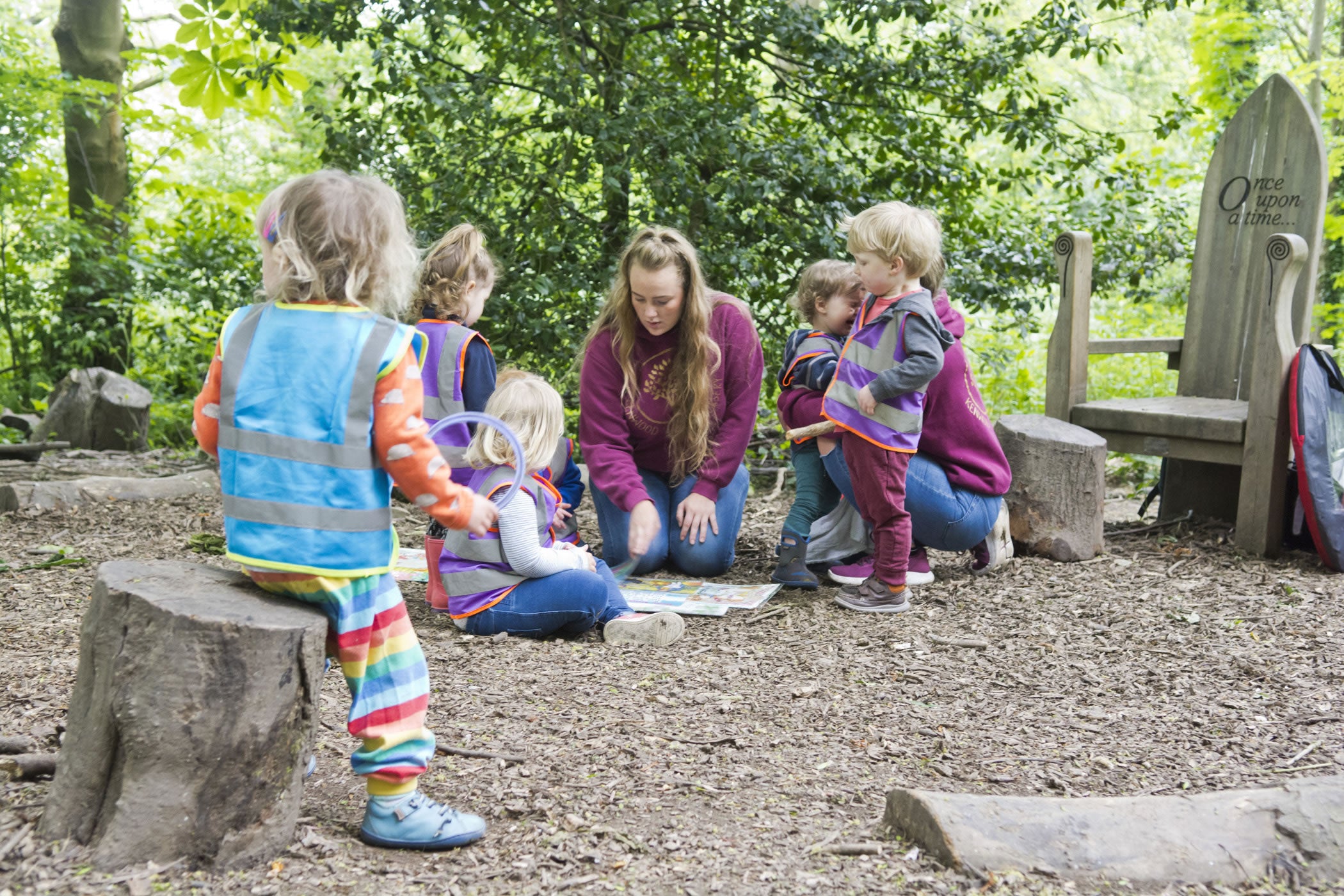
Our approach
Learning begins with being.
Every Forest School has fires, tools and dens. What makes one an Archimedes Forest School is why we do them, how we hold the child, and what we trust to unfold. This page sets out the twelve principles that govern all of it.
These are not house rules. They are a description of how children are actually built to grow, drawn from developmental science and tested across twenty five years of practice in real woodland with real children. We teach them because practice that ignores them does not work, not because we prefer them.
The premise
A child must be allowed to exist before they can be asked to achieve.
Almost every setting a child enters asks something of them within the first minute. Sit here. Line up. Answer this. The Archimedes premise is that there is a step before all of that, and skipping it is why so much good teaching lands on nobody.
A child who does not yet feel permitted to be present cannot learn, cannot regulate, cannot belong and cannot contribute. Not will not. Cannot. Everything else we do rests on getting that first step right, and it is the step almost nobody plans for.
The twelve principles
What we hold to, and will not trade away.
Twelve principles, in the order they build. Every Archimedes course teaches them, every Archimedes trainer is assessed against them, and every accredited Centre is judged by whether they can still be seen in the practice.
-
 Learning begins with beingA child must feel allowed to exist, as a living being in a living world, before they can learn, behave, perform or contribute.
-
 Biology and biophilia. Nature is a need, not a treatContact with the living world is a biological requirement for regulation and meaning, not an enhancement bolted onto real learning. This is Biology, the first movement of the Blackwell Growth Cycle.
-
 Growth follows a living cycleDevelopment unfolds from Biology outward through Boundary, Belonging, Belief and Build to Brilliance. In order, but never in a straight line.
-
 Boundaries are relational, not controlLearned through the living world and through relationship. Consistent, explained, and repairable afterwards, so the relationship survives them.
-
 Belonging is unconditionalTo people, to place, to the rhythms of nature. Never earned by behaviour, conformity or achievement, and never removed as a consequence.
-
 Belief cannot be demandedConfidence emerges when dignity, choice and time are honoured. It cannot be rewarded into existence or engineered on a schedule.
-
 Building is embodied and unhurriedReal skill comes through repetition, challenge, reflection and time. It cannot be accelerated, and it cannot be reduced to a metric without ceasing to be skill.
-
 Brilliance is contribution without sacrificeSustainable and relational. A child who is giving everything away is not flourishing, whatever the outcome looks like on paper.
-
 The cycle turns both waysSpiralling inward under stress is intelligent, not regression. When a child returns to an earlier movement, you restore the centre before you expect progress.
-
 We stand on established shouldersA synthesis of existing research translated into observable woodland practice, with its foundations named openly rather than quietly absorbed.
-
 We adapt without dilutingNever stamped over a culture. Translated into local consciousness instead. A British model, not a Scandinavian import. The test is congruence, not fidelity.
-
 The child stays at the centreExperiences, not activities. Observe, then plan. Frameworks are lenses for seeing a child more clearly, never tests for sorting them.
Principle three, in full
The Blackwell Growth Cycle.
Six movements, each one resting on the one before it. A child cannot be asked for Brilliance while Biology is unmet, and a child under stress travels back down it. That is not failure. It is the cycle doing its job.
- BiologyCertainty, safety, stability. Permission to be.
- BoundaryHeld, explained, repairable. Freedom with edges.
- BelongingUnconditional membership of people and place.
- BeliefDignity and choice, until confidence emerges on its own.
- BuildSkill through repetition and time. Unhurried.
- BrillianceContribution that costs the child nothing.
This is the framework the principles are built on, and it is the one practitioners tell us changes how they see a difficult morning. A child who will not join in is rarely refusing. Far more often they are somewhere earlier in the cycle than the session assumed.
Principle ten
We name our sources.
Archimedes is a synthesis, not a revelation. The Growth Cycle draws on established developmental, attachment, neurophysiological and learning research, translated into something a practitioner can actually see in a wood on a wet Tuesday.
We say so openly, because a model that hides its foundations cannot be examined, and a model that cannot be examined should not be trusted with children.
- Maslow
- Bowlby
- Porges
- Piaget
- Vygotsky
- Claxton
- Gardner
- Wilson
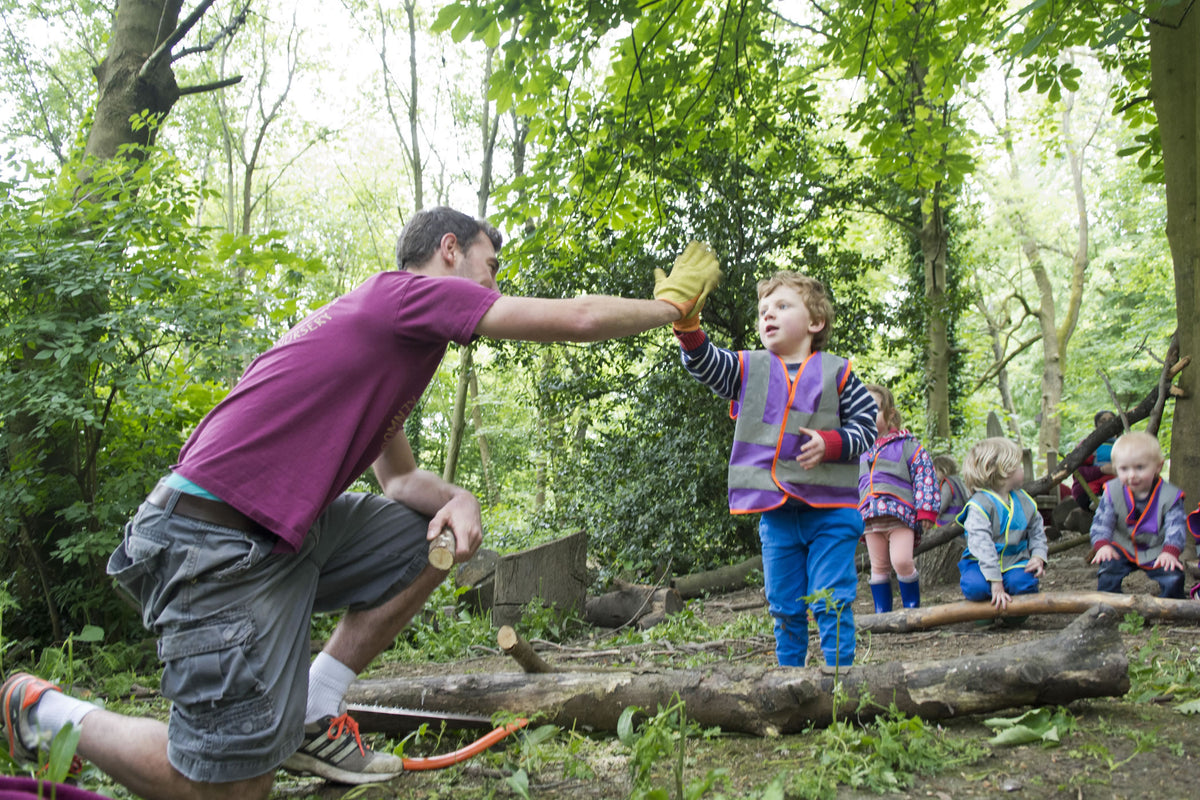
The frameworks
How the principles become something you can see.
A principle you cannot observe is a slogan. Each one has an instrument behind it, developed here, taught on our courses and used in real settings to turn a belief into an observation you can write down.
The Blackwell Growth Cycle
Six movements from Biology to Brilliance, with a four point observation scale for locating where a child actually is.
The Biophilia Lexicon
Language for what contact with the living world is doing in a child, so it can be recorded rather than felt vaguely.
The Five C's and the Emotional Wealth Inventory
What a child is carrying emotionally, and what the setting is adding to it or taking from it.
The Seven P's of Play
An observation matrix for play, so that what looks like nothing much can be named and planned from.
The CHOCOLATE Box
The conditions and edges of an environment, and what those edges permit a child to become.
Community of Brilliance
Attributes and intelligences across a whole group, for settings working at the level of culture rather than the individual child.
These are ours. They were developed here, they are taught here, and they are the reason an Archimedes qualification is not interchangeable with any other. Every one of them exists as a working document with observation forms behind it, not as a diagram on a slide.
The test is congruence, not fidelity.
Principle eleven. We adapt without diluting.What this asks of you
Nothing. You have to believe.
Archimedes asks for no belief, no identity and no affiliation. It asks only that practice stays faithful to how humans are biologically and ecologically organised to grow.
In practice that looks quite ordinary from the outside. Slow starts. A settled adult. Planning that follows observation rather than preceding it. Boundaries held kindly and repaired afterwards. And a definition of a successful session that has nothing to do with what got made, and everything to do with how fully each child was allowed to exist while they were there.
Where this is taught
Every level, from the first day onwards.
The principles are taught at Level 1 as orientation, at Level 2 as the way you hold yourself in a session alongside a Leader, at Level 3 as the ground of your own practice, and at Level 4 as the standard you become accountable for in other people's work.
See the courses

